
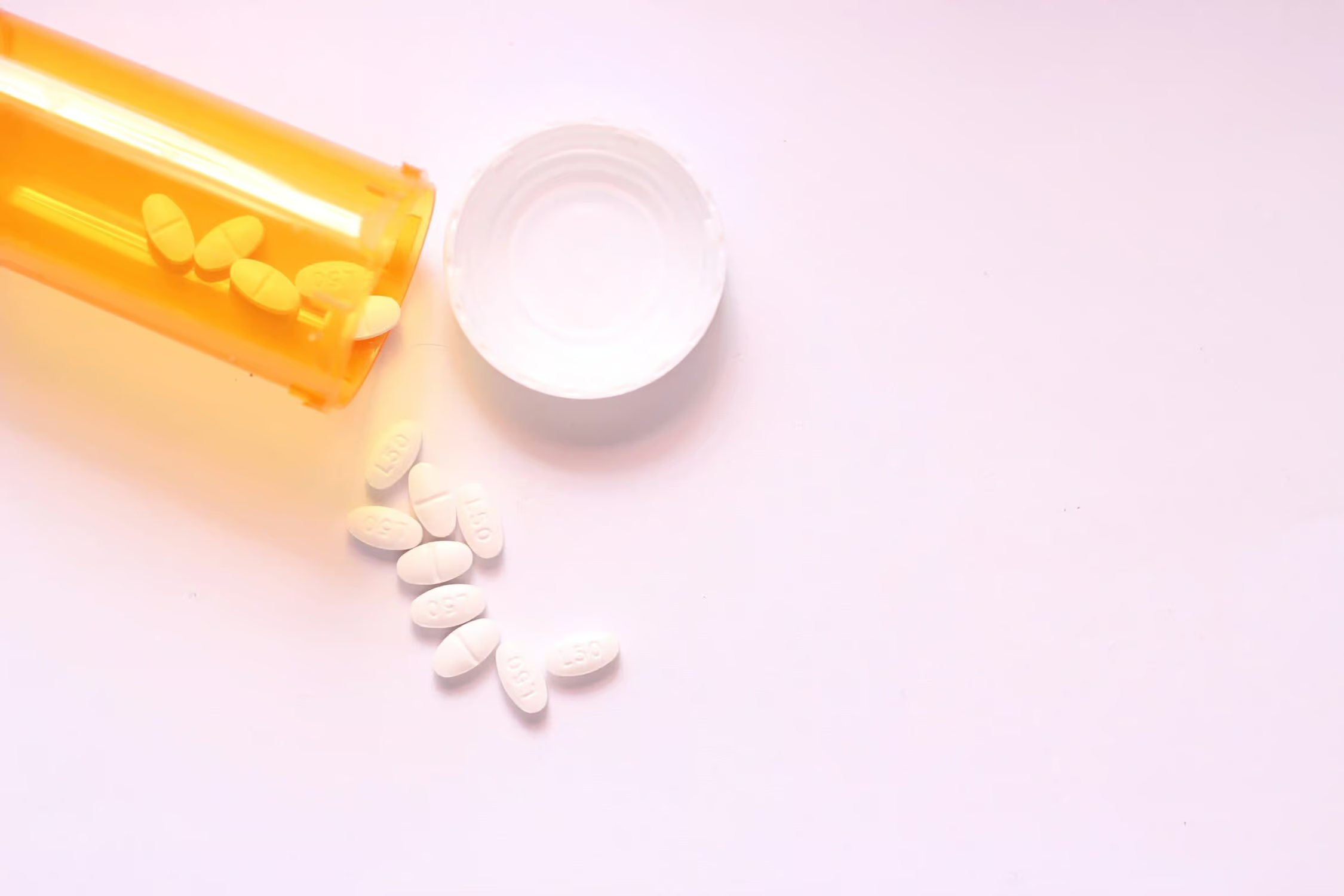
You were given Vicodin to ease pain, but now you’re left with new questions twisting in your mind, how long will this medication actually stay with me? It’s completely normal to feel uncertain when something prescribed to help you lingers in your body longer than expected. But, how long does Vicodin stay in your system? Understanding how Vicodin moves through your system isn’t just about curiosity; it’s a caring step toward keeping yourself safe and knowing when to reach for extra support if you ever feel overwhelmed.
What is Vicodin or hydrocodone?
Vicodin is a prescription painkiller that combines two key ingredients: hydrocodone, which is a powerful opioid, and acetaminophen, a common over-the-counter pain reliever. Together, they work to manage moderate to severe pain by changing how your brain perceives it. The hydrocodone component attaches to opioid receptors, effectively blocking pain signals, while the acetaminophen helps reduce fever and provides additional pain relief. It’s similar to other medications you might have heard of, like Norco. For a long time, hydrocodone-based medicines were incredibly common. According to the Drug Enforcement Administration, it was the most prescribed opioid in the United States, with millions of pills dispensed each year. This widespread availability is a big reason why understanding its effects and how long it stays in your system is so important for anyone using it.
Vicodin half-life
When we talk about how long a medication stays in your system, the term you’ll often hear is “half-life.” This simply measures how long it takes for the concentration of a drug in your body to decrease by 50 percent. For Vicodin, the active opioid ingredient is hydrocodone, which has a half-life of about four hours. This means that four hours after you take a dose, half of the hydrocodone is gone. After another four hours, half of what was left is gone, and so on.
It generally takes about five half-lives for a drug to be almost completely cleared from your bloodstream. With Vicodin, this means that after 20 hours, the amount of the drug in your system will be only about 3% of what it initially was. This predictable timeline is how medical professionals can estimate when the medication’s direct effects will wear off, but it doesn’t mean it’s undetectable.
Urine
A urine test is one of the most common ways to screen for substance use because it offers a longer detection window than some other methods. For Vicodin, its metabolites can typically be found in urine for about two to four days after the last dose. This makes urine tests a reliable choice for employers or healthcare providers who need to confirm recent use without requiring a more invasive procedure.
Blood
Blood tests are most effective for detecting very recent Vicodin use. The window for detection in the blood is much shorter, usually up to 24-48 hours after the last dose was taken. Because it clears from the bloodstream relatively quickly, blood tests are often used in situations where medical staff need to know what substances are actively affecting a person at that moment, such as after an accident or suspected overdose.
Saliva
Saliva tests are becoming more popular because they are non-invasive and easy to administer. Similar to blood tests, they detect recent use, typically identifying Vicodin for up to 24-48 hours after the last dose. This method provides a quick and convenient way to screen for the presence of the drug without the need for needles or a private restroom, making it a practical option for various drug testing scenarios.
Hair
Of all the testing methods, a hair follicle test offers the longest look back into a person’s substance use history. As your hair grows, drug metabolites are deposited into the hair shaft from the bloodstream. This creates a timeline of use that can be detected for up to 90 days. While a hair test can’t tell you about very recent use, it can provide a clear picture of a person’s usage patterns over the past few months.
Factors that affect how long Vicodin stays in your system
The detection windows we’ve discussed are just averages. How long Vicodin actually stays in your system can be influenced by some personal factors that make your experience unique. It’s helpful to understand these variables, as they explain why the same dose can affect two people very differently.
- Dosage and frequency. Taking higher doses or using Vicodin frequently means more of the drug accumulates in your body, which takes longer to clear.
- Metabolism rate. Everyone’s body processes substances at a different speed. A faster metabolism will break down and eliminate hydrocodone more quickly.
- Age. As we get older, our metabolism tends to slow down, and organ function can become less efficient, often causing drugs to stay in the system longer.
- Body mass and fat content. Hydrocodone can be stored in fatty tissues. Individuals with a higher body fat percentage may retain the drug for a longer period.
- Liver health. Your liver is the primary organ responsible for metabolizing Vicodin. If your liver function is impaired, it can’t process the drug as efficiently, extending its presence in your body.
- Hydration levels. Being well-hydrated can help your kidneys flush out drug metabolites more effectively, potentially shortening the detection time.
Getting treatment for Vicodin abuse
While Vicodin is an effective pain reliever, its opioid component carries a significant risk of dependence, addiction, and overdose, especially with long-term use. Research has shown that a concerning number of people prescribed opioids like Vicodin end up misusing them. If you feel like your use of Vicodin has become something you can’t control, please know that you’re not alone, and effective, compassionate help is available.
At Red Ribbon Recovery, we understand that reaching out is a huge step, and we meet you with warmth and understanding, not judgment. We offer a range of outpatient programs, including telehealth options, that fit into your life. Our approach focuses on treating you as a whole person, addressing not just the substance use but any underlying mental health challenges through dual diagnosis support and evidence-based therapies. Lasting recovery is possible, and we’re here to help you find it. To learn more, contact us for a free assessment and take the first step toward reclaiming your life.
Frequently asked questions
Vicodin can cause both physical dependence and psychological dependence, especially with repeated use or higher doses. Withdrawal symptoms may include anxiety, muscle aches, nausea, sweating, restlessness, and psychological symptoms such as cravings or mood changes. Because hydrocodone acts on opioid receptors, stopping suddenly after prolonged use can increase discomfort and relapse risk without medical guidance.
Vicodin is a controlled substance due to its opioid component and risk for misuse, impaired judgment, respiratory depression, and potentially fatal overdose. The acetaminophen component also carries a risk of liver damage when taken in high doses or combined with alcohol or other substances, making unsupervised or prolonged use especially dangerous.
How long Vicodin stays in your system depends on several factors, including your last dose, dosage strength, metabolism, liver and kidney function, body fat, hydration levels, and whether you were using immediate-release or extended-release formulations. Vicodin contains hydrocodone, a prescription opioid with an elimination half-life of about four hours, meaning it takes several half-lives for the drug to fully leave the body, often up to two days in healthy adults, though detection windows can be longer depending on the testing method.
Your path to recovery from Vicodin misuse
To sum it up, Vicodin can stay in your system anywhere from a day to three months, depending on the type of test and a variety of personal health factors. Knowing this information is a powerful first step in making informed decisions for your well-being. If you’re worried about your Vicodin use, that concern is a sign of strength. It’s an opportunity to pause and choose a new direction. Remember, asking for help is an act of courage, and a healthier life is completely within your reach. With the right support, like the kind offered through opioid addiction treatment, you can navigate the path to recovery with confidence.
Taking that next step can feel daunting, but you don’t have to do it alone. The compassionate team at Red Ribbon Recovery is here to listen and guide you with kindness and expertise. We’re here to help you understand your options, whether it’s learning more about our detox programs or simply having a confidential conversation. When you’re ready, reach out to us by calling (888) 899-3880 or contact us today. A healthier, more fulfilling life is waiting for you.
Sources
- Drug Enforcement Administration. (August 21, 2014). DEA to publish final rule rescheduling hydrocodone combination products. Drug Enforcement Administration.
- U.S. National Library of Medicine. (February 29, 2024). Hydrocodone – StatPearls – NCBI Bookshelf. NCBI Bookshelf.
- U.S. National Library of Medicine. (October 15, 2025). Hydrocodone combination products: MedlinePlus drug information. MedlinePlus.
- Drug Enforcement Administration. Hydrocodone (trade names: Vicodin®, Lortab®, Lorcet-HD® …). Drug Enforcement Administration.
- U.S. National Library of Medicine. (October 6, 2024). Hydrocodone and acetaminophen – StatPearls – NCBI Bookshelf. NCBI Bookshelf.
- U.S. Food and Drug Administration. Vicodin. U.S. Food and Drug Administration.
- National Center for Biotechnology Information. (October 1, 2018). Preclinical and clinical pharmacology of hydrocodone for chronic pain treatment: preclinical and clinical pharmacology of hydrocodone. Frontiers in Pharmacology.
- National Center for Biotechnology Information. (July 25, 2022). The practical importance of half-life in psychopharmacology: the practical importance of half-life in psychopharmacology. The Journal of Clinical Psychiatry.
- U.S. National Library of Medicine. (May 3, 2025). Elimination half-life of drugs – StatPearls – NCBI Bookshelf. NCBI Bookshelf.
- Substance Abuse and Mental Health Services Administration. (June 9, 2023). National helpline for mental health, drug, alcohol issues. Substance Abuse and Mental Health Services Administration.
- National Center for Biotechnology Information. (March 11, 2018). Telemedicine in addiction treatment: practices & implementation. Psychiatric Clinics of North America.
- Substance Abuse and Mental Health Services Administration. (June 10, 2014). Oxycodone and hydrocodone: detection in urine, oral fluid, and blood. Substance Abuse and Mental Health Services Administration.
- U.S. National Library of Medicine. (December 8, 2025). Opioid testing: MedlinePlus medical test. MedlinePlus.
- Alaska State Legislature. Interpretation of opiate urine drug screens. Alaska State Legislature.