
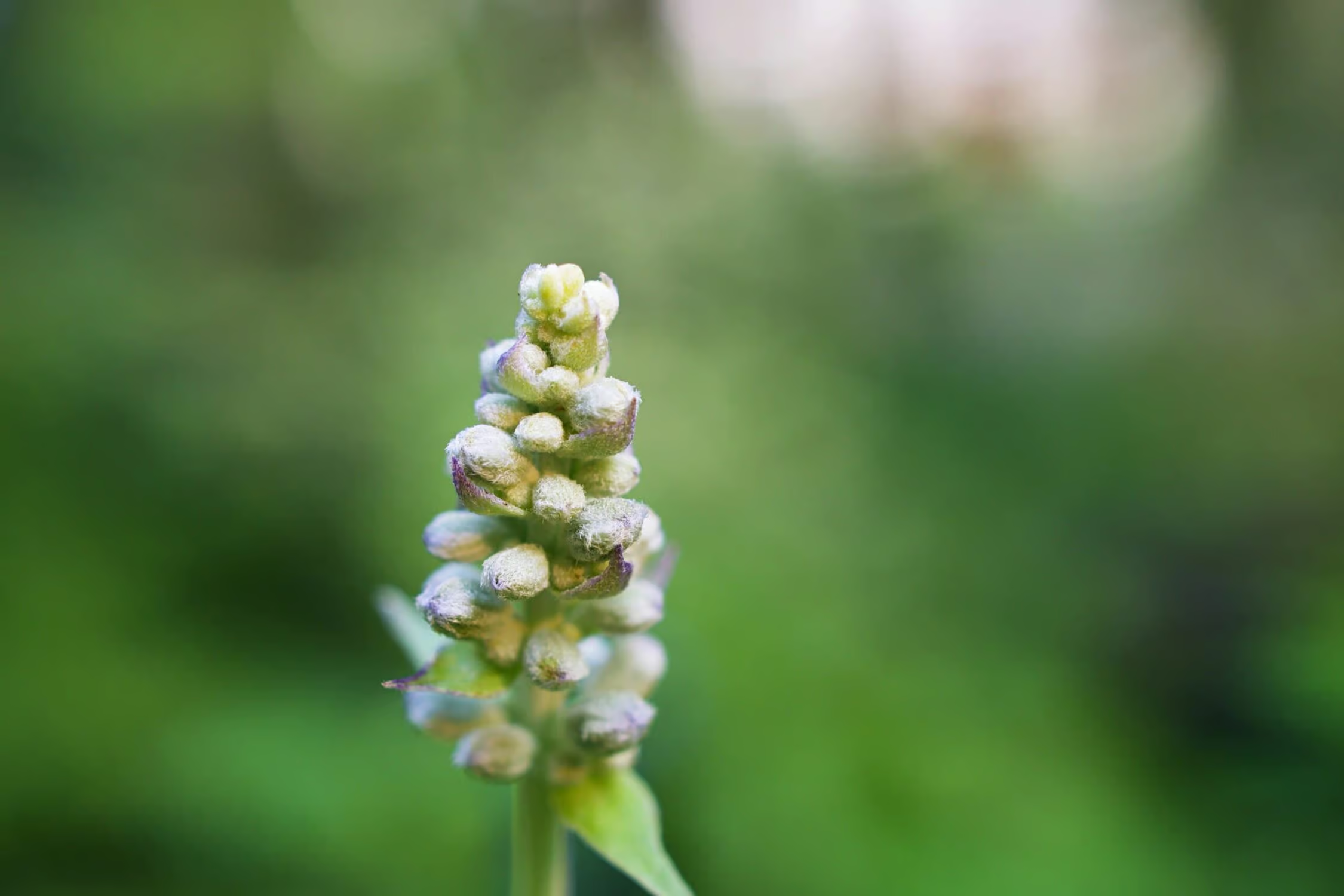
There’s a lot of curiosity surrounding salvia, and it’s easy to see why. It’s often mentioned in the same breath as other powerful substances, but the experience it creates is unique. If you’re trying to understand what a salvia high is really like, you’ve come to the right place. We’re here to walk through the effects, duration, and risks without judgment. Our goal is to give you clear, straightforward information so you can understand this substance and make safe, informed decisions for yourself or someone you care about.
What is Salvia divinorum?
Salvia divinorum is a plant in the mint family, originally from the cloud forests of Oaxaca, Mexico. For centuries, the Mazatec people have used it in spiritual and healing rituals. Known by many names, such as Maria Pastora, Sage of the Seers, or simply Salvia, it is valued for a compound in its leaves called Salvinorin A. This substance is considered one of the most potent naturally occurring hallucinogens. When someone uses salvia, they’re consuming this powerful compound.
What makes the salvia high so different from other hallucinogens is how Salvinorin A works in the brain. Instead of interacting with serotonin receptors like LSD or psilocybin, Salvinorin A is a potent agonist at kappa-opioid receptors. This unique mechanism is responsible for the intense, short-lived, and often disorienting dissociative experiences it produces. It doesn’t create the same euphoric feeling that many other drugs do; instead, it triggers a profound and often jarring shift in consciousness and perception. Understanding this distinction is key to appreciating why salvia’s effects are so unique.
How is salvia used?
When people ask, “how is salvia used?” the answer has changed over time. Consumption methods have evolved from traditional, ceremonial practices to modern techniques that deliver a much more intense experience. Originally, the Mazatec people would chew the fresh leaves or brew them into a tea for a gradual, prolonged spiritual journey. Today, the most common way to use salvia is by smoking dried leaves or potent extracts, which produces a very different kind of high.
Quid chewing
The traditional method of using salvia is known as quid chewing. This involves taking fresh salvia leaves, rolling them into a ball or “quid,” and chewing them slowly or holding them between the cheek and gum. Salvinorin A is absorbed through the lining of the mouth, or the oral mucosa. This process leads to a much more gradual onset of effects compared to smoking. The experience is typically milder, less overwhelming, and can last for an hour or more, allowing for a more introspective state rather than a sudden, intense hallucination.
Modern methods
In contrast to quid chewing, modern methods are designed for a rapid and powerful impact. These techniques almost always involve heating the substance to release the Salvinorin A for inhalation. The goal is to get a concentrated dose into the system as quickly as possible.
- Smoking. This is the most common modern method. Dried salvia leaves or extracts are smoked in a pipe or bong. The effects are felt almost instantly, usually within a minute, but the entire experience is very short, often lasting less than 15 minutes.
- Vaporization. Similar to smoking, vaporizing involves heating dried leaves or extracts to a temperature at which Salvinorin A vaporizes and can be inhaled. This method is often chosen to avoid the harshness of smoke. The effects are just as fast and intense as smoking.
- Tinctures. Salvia can also be made into a liquid tincture, which is held under the tongue for sublingual absorption. The effects of a tincture are typically slower to start than smoking but faster than chewing, offering a middle ground in terms of onset and duration.
Effects of the psychoactive plant Salvia
The effects of a Salvia high are known for being incredibly intense, unpredictable, and short-lived. Unlike many other substances, the experience can vary dramatically from person to person and even from one use to the next. Some people report fits of uncontrollable laughter, while others are thrown into vivid, and sometimes frightening, hallucinations. According to anecdotal user reports, when smoked the effects of salvia begin in 15 to 60 seconds and last for about 15 to 90 minutes.
During a salvia high, it’s common to experience profound changes in perception. You might feel pulled, twisted, or stretched. Time can seem to slow down or stop completely. Many people describe a feeling of detachment from their body or from reality itself, as if they are watching a movie of their life rather than living it. Visuals are often described as cartoon-like or geometric, and it’s possible to lose all connection with your immediate surroundings. Because the experience is so powerful and all-encompassing, those few minutes can feel like an eternity.
Impact of mood and environment
With a substance as powerful as salvia, the concept of “set and setting” is incredibly important. “Set” refers to your mindset, your mood, thoughts, and expectations before using. “Setting” refers to your physical environment, where you are and who you’re with. A negative mood, such as feeling anxious or stressed, can easily lead to a terrifying and paranoid experience with psychoactive drugs. Similarly, an uncomfortable or chaotic environment can turn the trip into a nightmare. A calm, safe, and familiar setting with a trusted person nearby is crucial for minimizing the risk of a bad trip.
Long-term effects for Salvia users
Currently, research on the long-term effects of salvia is still limited, and there isn’t much evidence to suggest lasting physical harm from the substance itself. However, the psychological risks are a real concern. A particularly traumatic or frightening experience, often called a “bad trip,” can have lingering effects. Some people report ongoing anxiety, feelings of derealization (feeling detached from reality), or other forms of psychological distress long after the high has worn off. These mental health impacts are the most significant long-term risk associated with salvia use.
Salvia and mental health
When we talk about Salvia, it’s essential to approach the topic of mental health with care and seriousness. The biggest risks associated with this substance are psychological. Because a Salvia high can cause a complete break from reality, the experience can be incredibly frightening and emotionally traumatic. During the high, a person can lose all awareness of their surroundings, putting them at risk for accidents or unintentional self-harm. They may not recognize people they know or understand where they are, which can lead to panic and unpredictable behavior.
For individuals with a personal or family history of mental health conditions like psychosis or schizophrenia, using salvia is especially dangerous. The intense effects can potentially trigger a psychotic episode or worsen existing symptoms. If you’re struggling with your mental health, it’s important to understand how substances like salvia can interfere with your well-being. Exploring the connection between depression and addiction can offer valuable insights into how these challenges often intertwine.
| Potential risk | Description |
|---|---|
| Intense anxiety and panic | Feelings of overwhelming fear, dread, or the sense that something terrible is about to happen. |
| Paranoia | Strong, irrational distrust of others; may include delusions of being watched or threatened. |
| Psychosis-like states | A temporary break from reality, including severe hallucinations, delusions, and disorganized thinking. |
| Dissociation | A profound sense of detachment from one’s body, thoughts, or environment, leading to a loss of self-awareness. |
| Accidental injury | Loss of coordination and awareness of surroundings can lead to falls, collisions, or other accidents. |
Tolerance and dependence
When it comes to tolerance and dependence, Salvia doesn’t fit the typical pattern of many other drugs. It’s not considered physically addictive in the way substances like opioids or alcohol are. However, it is possible to develop a psychological dependence on it. This happens when someone repeatedly uses the substance to escape or cope with problems, even if it’s causing negative consequences in their life.
Some users have even reported a phenomenon called “reverse tolerance,” where they need smaller doses over time to achieve the same effects, though this isn’t fully understood by science yet. The science of addiction helps explain how repeated substance use can change brain chemistry and behavior.
Legal status of plant derived hallucinogen Salvinorin
The legal status of Salvia divinorum in the United States is complicated. At the federal level, Salvia and its active ingredient, Salvinorin A, are not scheduled under the Controlled Substances Act. This means there are no federal laws against possessing or growing the plant. However, this doesn’t mean it’s legal everywhere. The Drug Enforcement Administration (DEA) has listed salvia as a “drug of concern,” indicating that it is monitored for its potential for abuse.
Because there is no federal ban, many states have created their own laws. As a result, the legality of salvia varies significantly from one state to another. Some states have made it completely illegal to possess, sell, or cultivate, while others have no restrictions at all. A few states have placed age restrictions on its purchase. It’s important to remember that these laws can change, and this information is purely for educational purposes, not legal advice. You can find more information in the DEA’s fact sheet on Salvia Divinorum.
Getting help for Salvia use
At Red Ribbon Recovery, we offer compassionate and accessible care designed to meet you where you are. Our outpatient and nationwide telehealth programs make it possible to get support without putting your life on hold. For those who are dealing with both substance use and mental health challenges, co-occurring disorders programs provide integrated treatment to address the whole picture. You don’t have to figure this out alone. You can get a confidential assessment to understand your options or call now for 24/7 support to speak with someone who cares.
Frequently asked questions
Salvia is often marketed as one of the so called legal highs, and some sources describe it as having low toxicity compared to other controlled substances. However, low toxicity does not mean low risk. Salvia use can lead to a bad trip, panic, risky behavior, and, in rare cases, persistent psychosis, especially in people with a family history of mental health conditions. While salvia is not known for strong physical dependence like alcohol or other substances, repeated drug abuse can still impact mental health and public health overall.
The legal status of selling and purchasing Salvia products varies by state and country. In some areas, Salvia divinorum is classified as a controlled substance. In others, it may still be legal to buy the herb in smoke shops or online. Laws continue to change as public health officials evaluate risks. Anyone considering salvia divinorum use should check local laws and understand that legality does not equal safety.
Salvia divinorum is a psychoactive plant in the mint family, sometimes called diviner’s sage, magic mint, maria pastora, or ska maría pastora. The active ingredient is salvinorin A, a potent plant derived hallucinogen. When smoked or taken from fresh leaves or dried leaves, salvia divinorum use can create a rapid onset of intense hallucinations. Many salvia users report vivid colors, bright lights, auditory hallucinations, uncontrollable laughter, and a distorted sense of the body or reality. The subjective effects are often described as an intense experience that feels very different from other psychoactive drugs like lysergic acid diethylamide.
Knowing the effects of Salvia
To wrap things up, it’s clear that salvia is a uniquely potent hallucinogen with some very real psychological risks. The intensity and unpredictability of the salvia high demand respect and caution. While curiosity about altered states of consciousness is natural, your safety and mental well-being should always come first. Making an informed choice based on clear facts is the best way to protect yourself. Understanding the unpredictable nature of a salvia high and the importance of a safe environment are crucial takeaways. Bad trips can have lasting psychological effects, underscoring the need for caution.
If you feel that your use of salvia or any other substance is becoming a concern, please know that reaching out is a sign of strength. The first step is often a simple conversation.
You can call us at (888) 899-3880 to speak with someone who understands, or explore our programs at Red Ribbon Recovery. Taking that next step, like learning about outpatient options, is a powerful move toward regaining control. Our team is ready to help you navigate your path to recovery whenever you’re ready. Contact us today.
Sources
- National Center for Biotechnology Information. (February 9, 2016). Salvinorin A | C23H28O8 | CID 128563 – PubChem. National Library of Medicine.
- U.S. Drug Enforcement Administration. Drug Fact Sheet: Salvia Divinorum. U.S. Department of Justice.
- Substance Abuse and Mental Health Services Administration. (June 9, 2023). National Helpline for Mental Health, Drug, Alcohol Issues. SAMHSA.
- Centers for Disease Control and Prevention. Evidence-Based Strategies to Prevent Youth Substance Use. Centers for Disease Control and Prevention.