
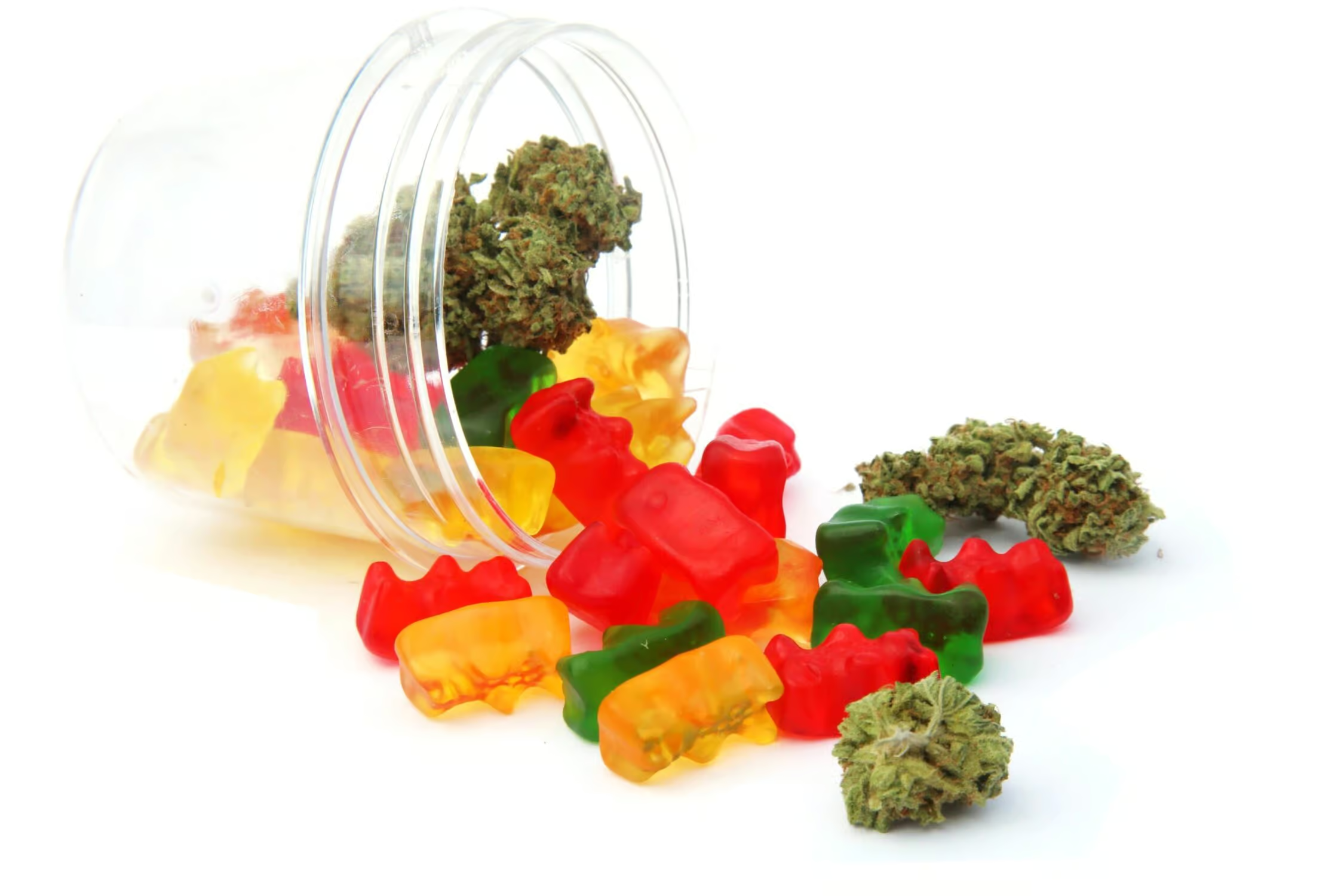
Navigating the world of cannabis can feel confusing, especially with so many different terms and products out there. You might have heard about Delta-9 and wondered what it really is, how it affects you, and whether it’s something you need to be concerned about. It’s completely normal to have these questions. Sorting through the science, the stories, and the legal gray areas can be a lot to handle on your own. We’re here to walk through it with you, providing clear, straightforward information to help you understand Delta-9, its effects, and what it means for you or someone you care about. You’re not alone in this, and getting clear answers is the first step toward making informed choices.
What is Delta 9?
When people talk about THC, they’re almost always referring to Delta-9-tetrahydrocannabinol, or Delta-9 for short. It’s the primary psychoactive compound found naturally in cannabis plants. Think of it as the main ingredient that causes the “high” and other well-known effects associated with marijuana. This happens because the Delta-9 molecule is perfectly shaped to fit into and activate specific receptors in our brains called CB1 receptors. These receptors are part of the body’s endocannabinoid system, which helps regulate things like mood, memory, appetite, and pain sensation. When Delta-9 binds to these receptors, it temporarily alters this system, leading to the various physical and mental effects people experience.
So, to answer a common question, “Is Delta-9 real weed?”, yes, it is. Delta-9 THC is the most abundant and naturally occurring psychoactive component in what is commonly known as weed or marijuana. Its effects are central to the way cannabis interacts with the human body, a complex process you can learn more about by understanding the science of addiction and brain chemistry.
What are the potential benefits of delta-9?
While Delta-9 is known for its psychoactive effects, it also has several potential therapeutic benefits that have been recognized in medicine. It’s important to distinguish between government-approved medical uses and anecdotal reports, but both contribute to our understanding of this compound. The Food and Drug Administration (FDA) has approved medications containing a synthetic form of THC to treat specific conditions, which underscores its legitimate medical potential.
Here are some of the key potential benefits associated with Delta-9 THC:
- Appetite stimulation. For individuals experiencing severe weight loss due to conditions like AIDS, the FDA has approved dronabinol, a synthetic THC, to help stimulate appetite.
- Nausea and vomiting relief. This same FDA-approved medication is also used to help cancer patients manage the intense nausea and vomiting that can be a side effect of chemotherapy, especially when other treatments haven’t worked. You can find more information directly from the U.S. Food and Drug Administration about medications like MARINOL (dronabinol).
- Pain management. Many people report using cannabis for chronic pain relief. Research suggests that THC may help manage certain types of pain, particularly neuropathic (nerve-related) pain, by interacting with pain pathways in the central nervous system.
- Relaxation and mood improvement. On a wellness level, many users experience feelings of relaxation, euphoria, and an overall improved mood. For some, this can be a way to unwind and manage stress, and it’s one reason people turn to cannabis. When these feelings are sought to manage underlying mental health issues, it highlights the complex link between depression and addiction.
What are the potential side effects of delta-9?
Just as Delta-9 has potential benefits, it also comes with a range of possible side effects. These effects can vary a lot from person to person, depending on things like the dose, the way it’s consumed (e.g., smoking vs. edibles), and an individual’s own tolerance and body chemistry. For some, these side effects are mild and short-lived, while for others, they can be quite distressing.
Some of the most common short-term side effects include:
- Anxiety and paranoia. Instead of feeling relaxed, some people experience heightened anxiety, fear, or paranoia after using THC.
- Increased heart rate. THC can cause a temporary increase in heart rate, which might be concerning for individuals with heart conditions.
- Coordination problems. It can impair motor skills, making activities like driving dangerous.
- Short-term memory impairment. You might find it difficult to form new memories while under the influence of THC.
- Dry mouth and red eyes. These are very common physical side effects.
While these effects are typically temporary, they point toward the powerful impact Delta-9 has on the brain and body. For some, what starts as occasional use can lead to more significant, long-term challenges.
What are the potential risks of delta-9?
Beyond the immediate side effects, one of the most significant risks associated with Delta-9 is the potential for dependency and addiction. This is known clinically as Cannabis Use Disorder (CUD). It’s a real and challenging condition that occurs when someone’s use of cannabis starts to cause meaningful problems in their life, but they feel unable to stop. It’s estimated that approximately 10% of regular cannabis users may develop CUD.
Symptoms of cannabis use disorder can include trying to cut down or quit without success, spending a lot of time using cannabis, giving up important activities with friends or family in favor of using, and continuing to use even when it causes problems at work, school, or in relationships. Because Delta-9 directly stimulates the brain’s reward pathways, it can create a powerful psychological dependence.
Over time, the brain may adapt to its presence, leading to tolerance (needing more to get the same effect) and withdrawal symptoms when use is stopped. If you recognize these patterns in yourself or a loved one, know that specialized treatment can help manage these challenges and support long-term well-being through resources like a relapse prevention program.
What’s the difference between delta-9 and delta-8?
You may have also heard about Delta-8 and wondered how it’s different from Delta-9. While they sound very similar, there are key distinctions in their chemical makeup, potency, and legal status that are important to understand. Both are forms of THC, but a tiny difference in their molecular structure changes how they affect the body.
The main difference lies in the placement of a specific chemical bond. This subtle shift makes Delta-8 bind to the CB1 receptors in the brain less strongly than Delta-9. As a result, many people report that Delta-8 is less potent. Anecdotally, it’s often described as providing a milder, clearer high with less anxiety compared to the more intense effects of Delta-9. Another major difference is their source. Delta-9 is abundant in marijuana plants, while Delta-8 is found only in trace amounts. Because of this, most Delta-8 products are made by chemically converting CBD from federally legal hemp, which has led to a complicated legal landscape.
| Feature | Delta-9 THC | Delta-8 THC |
|---|---|---|
| Chemical Structure | Double bond on the 9th carbon chain | Double bond on the 8th carbon chain |
| Potency | Primary psychoactive compound, high potency | Less potent, often described as milder |
| Source | Abundant in marijuana | Found in trace amounts; often synthesized from hemp-derived CBD |
| Legal Status | Federally illegal if from marijuana; legal in some states | Often legal at a federal level if derived from hemp, but banned in many states |
Is delta-9 legal?
The legality of Delta-9 is one of the most confusing parts of the cannabis landscape because it depends entirely on where it comes from and where you are. There’s a major split between federal law and state laws, which creates a patchwork of regulations across the country.
At the federal level, the source of the Delta-9 is key. According to the 2018 Farm Bill, hemp and its derivatives are legal as long as the final product contains no more than 0.3% Delta-9 THC by dry weight. This means that products like edibles and tinctures made from hemp-derived Delta-9 can be federally legal. However, Delta-9 that comes from marijuana (cannabis with more than 0.3% THC) is still classified as a Schedule I controlled substance and remains federally illegal.
To make things even more complicated, states have their own laws. Many states have legalized marijuana for medical or recreational use, making marijuana-derived Delta-9 legal within their borders, despite federal prohibition. At the same time, some states have specifically banned or restricted hemp-derived Delta-9 products, even though they are technically legal at the federal level. Because these laws are constantly changing and vary so widely, it’s crucial to check the specific regulations in your state and local area.
Frequently asked questions
Yes, Delta-9 THC is the main psychoactive compound found in the cannabis plant, and it is responsible for the feeling of being “high.” It works by interacting with cannabinoid receptors in your brain, which can temporarily alter your mood, senses, and perception of time.
The intensity of these effects often depends on the dosage, your individual tolerance, and the method of consumption, whether it’s smoking, vaping, or using edibles.
No, Delta-9 THC is a naturally occurring cannabinoid found in both marijuana and hemp plants. In fact, it’s the most abundant psychoactive compound that grows naturally in cannabis.
This makes it fundamentally different from dangerous synthetic cannabinoids like “Spice” or “K2.” Those substances are entirely created in a lab and can produce much more unpredictable and harmful effects on the brain and body.
No, they are not the same. While standard Delta-9 is a natural compound from the cannabis plant, Delta-9 THC-O acetate (often called THC-O) is a synthetic substance. It is typically produced in a lab by chemically modifying hemp-derived CBD or Delta-8.
THC-O is considered a “prodrug,” which means its effects are only activated after being processed by the body. Users often report that it is significantly more potent than natural THC, which may increase its potential risk.
Knowing what is Delta 9: finding support for cannabis use disorder
At Red Ribbon Recovery, we provide a safe and supportive space to address these challenges. We understand that CUD often co-occurs with mental health conditions like anxiety or depression, which is why our dual diagnosis treatment is designed to care for your whole self. With flexible outpatient programs and accessible telehealth options, you can get the help you need without putting your life on hold. We are here to listen, to understand your story without judgment, and to help you build a healthier, more fulfilling future.
It’s okay to feel overwhelmed, but you don’t have to navigate this journey alone. Understanding what Delta-9 is is just the beginning. If you’ve been struggling with cannabis use and feel like it’s taking control of your life, reaching out for help is a sign of incredible strength. At Red Ribbon Recovery, our compassionate team is here to offer support, guidance, and effective treatment tailored to you. You can start the conversation today by calling us at (888) 899-3880 or contact us today. Taking that first step can lead to lasting recovery and a brighter future.
Sources
- Crocq, M. A. (2020). History of cannabis and the endocannabinoid system. Dialogues in Clinical Neuroscience.
- National Center for Biotechnology Information. (August 23, 2025). Tetrahydrocannabinol. PubChem Compound Summary.
- U.S. Food and Drug Administration. (August 17, 2017). MARINOL (dronabinol) capsules, for oral use. U.S. Food and Drug Administration.
- Weber, J., et al. (October 25, 2009). Tetrahydrocannabinol (Delta 9-THC) Treatment in Chronic Central Neuropathic Pain and Fibromyalgia Patients: Results of a Survey. Schmerz.
- Millar, J. R., et al. (November 3, 2016). Delta-9-tetrahydrocannabinol and cannabidiol. Medical Cannabis and Cannabinoids.
- Substance Abuse and Mental Health Services Administration. (2024). Results from the 2024 National Survey on Drug Use and Health. SAMHSA.
- Krutul, E., et al. (January 4, 2022). Delta-8-THC: Delta-9-THC’s nicer younger sibling?. Journal of Cannabis Research.
- Congressional Research Service. (August 20, 2025). The 2018 Farm Bill’s Hemp Definition and Legal Challenges to State Restrictions. U.S. Congress.
- U.S. Food and Drug Administration. (July 25, 2019). Hemp Production and the 2018 Farm Bill. U.S. Food and Drug Administration.
- Substance Abuse and Mental Health Services Administration. (July 26, 2023). Prevention of Substance Use. SAMHSA.